Why Understanding Korea Requires More Than Translation
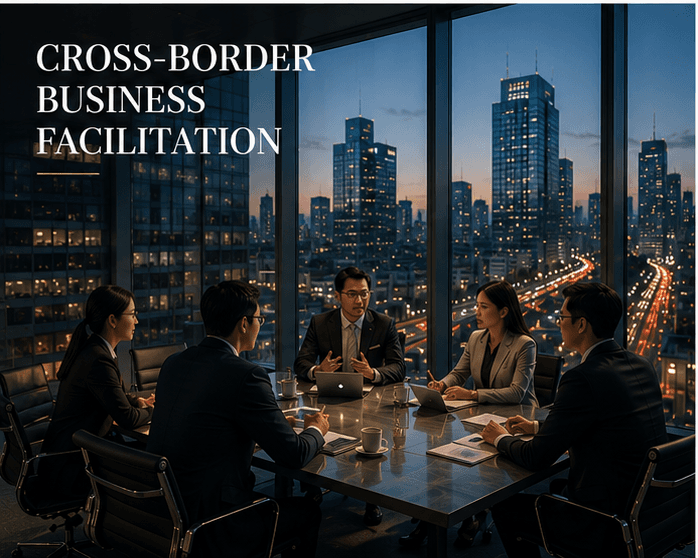
The institutions engaged through this work are listed in the Selected Institutional Portfolio.
→ Cross-Border Business Facilitation
As Korea continues to attract growing global attention across technology, beauty, wellness, medical innovation, digital culture, and international business, many global companies and institutions are increasingly interested in building partnerships within the Korean ecosystem.
At first glance, modern communication tools may appear to make international collaboration easier than ever before.
Translation is now instant.
Information is widely accessible.
Meetings can be organized globally within minutes.
Yet despite these technological advances, meaningful cross-border collaboration with Korea often remains more complex than many international partners initially expect.
Because understanding Korea rarely depends only on language itself.
In many situations, translation may successfully communicate words while still failing to fully communicate intention, emotional nuance, hierarchy, communication rhythm, or relationship dynamics.
Korea is a highly modern and globally connected society.
At the same time, it also continues to operate through deeply layered social and cultural structures that are not always immediately visible to international partners.
Communication often moves through subtle signals.
Visible politeness does not always necessarily indicate agreement.
Silence may carry meaning.
Trust is frequently built progressively through observation, consistency, emotional sensitivity, and long-term relationship positioning rather than through immediate transactional efficiency alone.
For many European or international organizations, these invisible layers can sometimes create unexpected misunderstandings during meetings, negotiations, partnerships, or collaborative discussions.
Very often, both sides may actually share similar objectives.
However, the interpretation of communication itself may move differently.
Some business environments prioritize direct clarity and rapid decision-making.
Others may move more gradually through relationship architecture, contextual understanding, emotional pacing, and strategic observation before decisions become fully visible.
As a result, successful international collaboration with Korea often requires far more than simple translation.
It increasingly requires cultural interpretation.
Emotional intelligence.
Communication sensitivity.
And the ability to understand how business psychology itself may operate differently across cultures.
At KP Nalgae, cross-border facilitation is approached through this broader human-centered perspective.
Not simply helping different sides exchange information, but helping them better interpret each other’s expectations, communication styles, strategic intentions, and cultural rhythms in ways that create more meaningful long-term collaboration.
Whether across medical innovation, wellness, beauty, technology, public institutions, or cross-border business ecosystems, Korea’s strengths may become significantly more valuable when approached with deeper cultural understanding rather than surface-level interpretation alone.
Perhaps this is why cultural understanding itself is increasingly becoming a strategic advantage in global business environments.
Because beyond translation, successful international collaboration is ultimately still built through human understanding.
Related Perspectives
→ Read more about Cross-Border Business Facilitation.
Author
Kary Sungmi Park
Paris-based cross-cultural strategist and founder of KP Nalgae.