Korea’s Hidden Human Systems
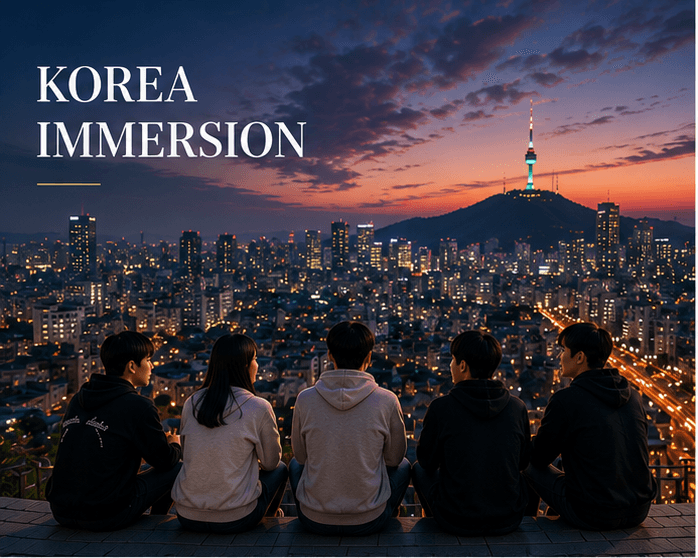
Korea is often described internationally through visible characteristics.
Fast.
Efficient.
Digitally advanced.
Highly connected.
Globally competitive.
And in many ways, these observations are true.
Visitors frequently experience Korea through its visible energy:
high-speed infrastructure,
advanced technology,
efficient public systems,
late-night activity,
rapid adaptation,
and constantly evolving consumer culture.
Yet beneath this visible surface exists another layer that international visitors do not always immediately recognize.
A quieter layer.
An invisible human system.
Because while Korea may appear highly accelerated externally, much of Korean society continues to move through deeply interconnected emotional, social, and collective structures that quietly influence everyday life, communication, relationships, and decision-making.
Beyond Visible Efficiency
In Korea, social awareness itself often functions almost like an invisible language.
People continuously observe emotional atmosphere, hierarchy, timing, group dynamics, and unspoken expectations.
Communication may sometimes occur indirectly.
Silence may carry meaning.
Emotional pacing may matter as much as verbal clarity.
Trust is often built progressively through consistency, observation, mutual sensitivity, and long-term relational positioning rather than through immediate openness alone.
To many international visitors, Korea can therefore feel both remarkably warm and unexpectedly difficult at the same time.
Highly collective, yet emotionally restrained.
Extremely fast, yet socially layered.
Deeply modern, yet strongly shaped by invisible cultural continuity.
Korea Beyond Surface Observation
Perhaps this complexity is partly why Korea fascinates so many globally minded individuals today.
Because beyond trends, beyond K-pop, beyond technology, and beyond visible efficiency, Korea also offers a rare opportunity to observe how human systems continue adapting inside one of the world’s fastest-moving societies.
This becomes especially visible in Korean education, beauty culture, wellness ecosystems, digital environments, entrepreneurship, and even professional communication structures.
Pressure and adaptability often coexist simultaneously.
Collective harmony and individual ambition frequently move together.
Innovation itself is often accelerated not only by systems, but also by emotional intensity, social responsiveness, and collective momentum.
Yet many international observers may only experience Korea through its visible outputs without fully understanding the invisible human structures underneath.
And perhaps this is where deeper cultural understanding becomes increasingly important.
Reflection Beyond Korea
Perhaps understanding these invisible human systems also creates another important opportunity.
Not simply to observe Korea itself, but to reflect more deeply on our own societies, cultures, business environments, communication habits, and human relationships through contrast and comparison.
Because sometimes, meaningful cultural understanding begins precisely when we encounter different ways of living, communicating, collaborating, and adapting.
And perhaps through this process, globally minded teenagers, entrepreneurs, institutions, and professionals may begin asking new questions:
What can be learned from Korea’s intensity, adaptability, and collective systems?
Which aspects may inspire new ideas within our own environments?
And equally importantly, which differences reveal the unique strengths and values of our own cultures?
Perhaps through this process, we may also discover new ways to rethink and embrace our own approaches toward education, business, wellbeing, and human connection within our own societies.
At KP Nalgae, this broader reflection process remains an important part of our human-centered approach toward Korea immersion, cross-border facilitation, and international relationship architecture.
Not simply providing information or surface-level experiences, but creating opportunities for deeper observation, interpretation, reflection, and meaningful global understanding.
Author
Kary Sungmi Park — Paris-based cross-cultural strategist and founder of KP Nalgae.
Related Perspectives
• Why Korea Became a Global Creative Power
• Why Cross-Border Business Often Fails Beyond Strategy