Why Korea Became a Global Creative Power
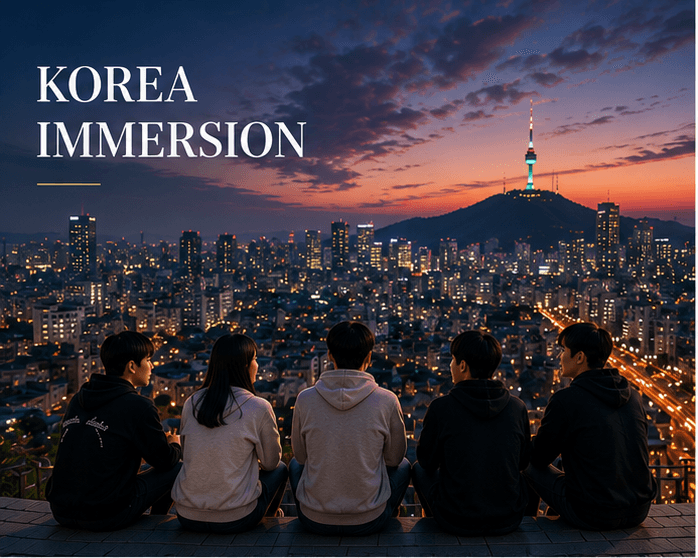
→ Korea Immersion, experiences for globally minded teenagers
For many people internationally, Korea’s global cultural influence may appear surprisingly rapid.
K-pop dominates international music charts.
Korean dramas shape global streaming culture.
Korean beauty influences worldwide aesthetics.
Korean gaming, fashion, cafés, visual storytelling, and digital content continue expanding rapidly across borders.
Yet Korea did not become a global creative power through trends alone.
Something much deeper exists underneath.
A society shaped by extraordinary discipline, emotional intensity, adaptation, pressure, creativity, and rapid transformation.
How Korea Developed a Unique Creative Rhythm
Over time, while living and working between Seoul, Hong Kong, Paris, and multicultural international environments, I began reflecting more deeply on how Korea developed such a strong global cultural presence within a relatively short historical period.
Modern Korea evolved extremely quickly.
Economically.
Digitally.
Socially.
Emotionally.
Culturally.
And perhaps because of this accelerated transformation, Korean society developed a very particular creative rhythm.
A rhythm shaped by:
• Adaptability
• Collective discipline
• Constant reinvention
• High emotional sensitivity
• Competitive pressure
• Strong digital integration
This intensity became visible across many sectors:
• Music
• Gaming
• Fashion
• Beauty
• Design
• Technology
• Digital media
• Youth culture
Why Korea’s Creative Energy Resonates Globally
But perhaps what makes Korea particularly fascinating globally is not simply efficiency or innovation.
It is emotional energy.
Korean culture often feels emotionally expressive while remaining highly disciplined at the same time.
Creative while competitive.
Hypermodern while deeply connected to tradition.
Globally influential while still navigating strong internal social pressure.
And perhaps this coexistence of contradiction itself creates much of Korea’s creative power.
For younger generations globally, Korea often feels visually dynamic, emotionally expressive, and culturally alive.
Not static.
But constantly evolving.
And perhaps this is precisely why Korea increasingly resonates with younger global generations seeking creativity, identity, expression, and cultural energy beyond conventional structures.
Why Reflection Matters in Korea Immersion
Yet meaningful understanding of Korea’s creative culture rarely happens through tourism alone.
Because creativity itself in Korea is deeply connected to larger human systems:
education
social pressure
digital acceleration
identity
competition
collective culture
emotional resilience
This realization gradually became one of the philosophical foundations behind KP Nalgae and the evolving concept of Korea Immersion Experiences for globally minded teenagers and international generations.
Not simply organizing entertainment-focused activities.
But carefully curating immersive experiences where younger generations may engage with Korea through:
creative ecosystems,
digital culture,
reflection,
conversation,
human observation,
cultural intelligence,
contemporary Korean society itself.
Because perhaps meaningful global experiences today are no longer simply about consuming successful cultures.
Perhaps they increasingly depend on understanding the invisible human dynamics shaping those cultures underneath.
And perhaps Korea, with all its creativity, contradiction, resilience, emotional intensity, and extraordinary global rise, has quietly become one of the most fascinating creative societies in the modern world.
→ Read more about Korea Immersion experiences.
Author
Kary Sungmi Park — Paris-based cross-cultural strategist and founder of KP Nalgae.
Related Perspectives
• Korea’s Creative Discipline and Global Influence
• Understanding Korean Gaming Culture
• Technology Alone Does Not Build Future Cities