What Global Parents Often Misunderstand About Korean Youth Culture
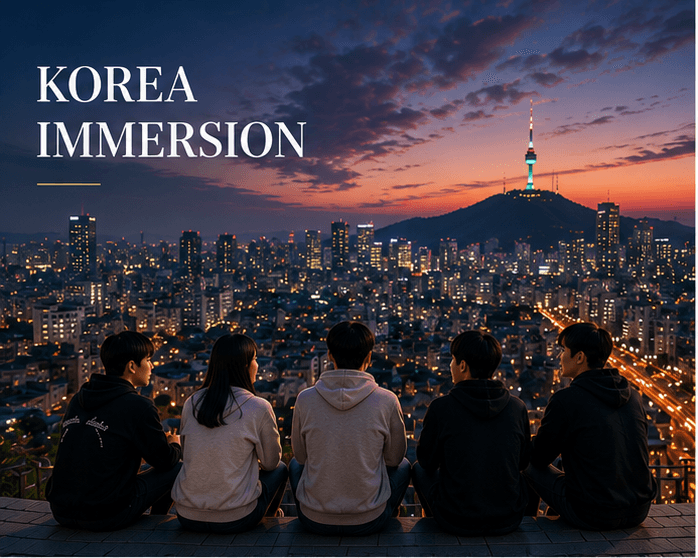
→ Korea Immersion, experiences for globally minded teenagers
For many international parents, Korean youth culture is often first recognized through highly visible global trends.
K-pop.
Fashion.
Gaming culture.
Social media.
Beauty aesthetics.
Digital creativity.
Beyond Entertainment Visibility
Over time, while living and working between Seoul, Hong Kong, Paris, and multicultural international environments, I began observing how many global parents interpret Korean youth culture primarily through entertainment visibility alone.
But behind the polished digital surface exists a much deeper reality.
A younger generation navigating extraordinary levels of:
• Academic pressure
• Social competition
• Digital exposure
• Identity formation
• Collective expectation
• Emotional intensity
• Rapid societal change
For many Korean teenagers, digital culture is not simply entertainment.
It is deeply connected to friendship, belonging, identity, self-expression, emotional validation, and social survival itself.
Appearance often carries strong social meaning.
Online visibility influences confidence and status.
Gaming culture becomes part of social interaction.
Social media shapes communication patterns and emotional rhythm.
And younger generations continuously navigate the tension between individuality and collective expectation.
Why Korean Youth Culture Resonates Globally
Yet perhaps this is precisely what makes Korean youth culture increasingly fascinating globally.
Because many of the pressures Korean teenagers experience today increasingly reflect broader tensions shaping younger generations worldwide.
Digital hyperconnectivity.
Identity pressure.
Social comparison.
Performance culture.
Emotional fatigue.
And the search for belonging inside highly accelerated environments.
Why Reflection Matters in Korea Immersion
Yet traditional tourism structures rarely create enough space for global families to observe these deeper social and emotional dynamics meaningfully.
Experiences often remain surface-level.
Observation becomes rushed.
And meaningful cultural understanding disappears behind consumption.
But meaningful immersion often requires something slower.
More reflective.
More human-centered.
This realization gradually became one of the philosophical foundations behind KP Nalgae and the evolving concept of Korea Immersion Experiences for globally minded teenagers and international families.
Not simply organizing entertainment-focused itineraries.
But carefully curating immersive experiences where younger generations and global families may engage with Korea through:
• Digital culture
• Human observation
• Conversation
• Reflection
• Creative ecosystems
• Cultural intelligence
• Emotional awareness
• Contemporary Korean society itself
Because perhaps meaningful international experiences today are no longer simply about visiting globally influential cultures.
Perhaps they increasingly depend on understanding the invisible human systems shaping those cultures underneath.
And perhaps Korea, with all its creativity, contradiction, emotional intensity, hyperconnectivity, and rapid transformation, has quietly become one of the most fascinating societies through which younger generations and global families may begin exploring those larger questions together.
→ Read more about Korea Immersion experiences.
Author
Kary Sungmi Park — Paris-based cross-cultural strategist and founder of KP Nalgae.
Related Perspectives
• Why Teenagers and Parents Experience Travel Differently
• The Hidden Emotional Gap Inside International Families