Understanding Korean Gaming Culture
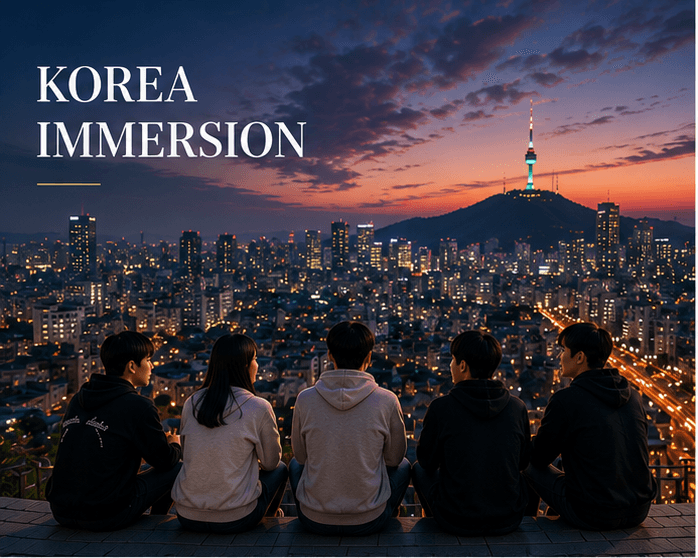
→ Korea Immersion, experiences for globally minded teenagers
For many international teenagers today, Korean gaming culture represents far more than entertainment.
It has become a highly influential social ecosystem deeply connected to contemporary Korean society itself.
Gaming cafés remain active throughout the night.
Esports competitions attract massive audiences.
Digital communities evolve rapidly across platforms.
Streaming culture shapes communication and identity.
And younger generations increasingly interact through highly connected virtual environments that often extend directly into everyday social life.
Yet Korean gaming culture cannot be understood simply through games alone.
Why Korean Gaming Culture Reflects Contemporary Korean Society
Over time, while living and working between Seoul, Hong Kong, Paris, and multicultural international environments, I began observing how gaming culture in Korea often reflects much larger dimensions of modern Korean society.
Competition.
Speed.
Discipline.
Collective interaction.
Digital adaptation.
Social belonging.
Identity.
Creativity.
And emotional release inside highly pressured environments.
For many younger generations globally, Korean gaming culture feels immersive, socially dynamic, and emotionally alive at the same time.
Gaming cafés themselves often function as social environments rather than purely entertainment spaces.
Teenagers gather together physically while interacting digitally.
Teams communicate intensely in real time.
Online identity becomes deeply connected to friendship, status, collaboration, and self-expression.
And perhaps this is partly why Korea became one of the world’s most influential gaming cultures.
Because gaming itself integrated naturally into broader Korean digital society.
The Human Side of Korean Digital Culture
At the same time, Korean gaming culture also reflects some of the larger tensions shaping younger generations today.
Hyperconnectivity.
Digital dependency.
Social pressure.
Competition.
Performance.
Emotional fatigue.
And the constant negotiation between online and offline identity.
Yet traditional tourism structures rarely create enough space for international teenagers to observe these deeper cultural dynamics meaningfully.
Gaming experiences often become reduced to entertainment consumption alone.
But meaningful immersion requires something deeper.
More observational.
More reflective.
More human-centered.
Why Reflection Matters in Korea Immersion
This realization gradually became one of the philosophical foundations behind KP Nalgae and the evolving concept of Korea Immersion Experiences for globally minded teenagers and international generations.
Not simply organizing gaming activities.
But carefully curating experiences where younger generations may engage with Korean digital society through:
gaming culture
creative ecosystems
human observation
conversation
reflection
cultural intelligence
digital identity
contemporary Korean youth culture itself
Because perhaps meaningful global experiences today are no longer simply about entertainment access.
Perhaps they increasingly depend on understanding the human systems shaping modern digital societies underneath.
And perhaps Korea, with all its speed, creativity, emotional intensity, hyperconnectivity, and globally influential gaming ecosystems, has quietly become one of the most fascinating societies through which younger generations may begin exploring those larger questions.
→ Read more about Korea Immersion experiences.
Author
Kary Sungmi Park — Paris-based cross-cultural strategist and founder of KP Nalgae.
Related Perspectives
• What Teenagers Actually Experience Inside Korea
• Why Korea Fascinates Global Teenagers
• Korea Beyond K-pop for International Teenagers